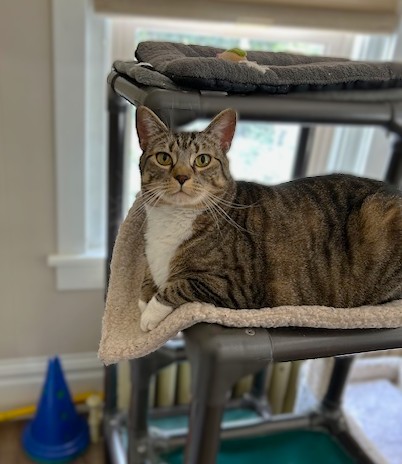
Bella came into rescue weighing over 20 pounds, fur all matted and smelling powerfully of
urine. She was surrendered for urinating outside the litter box for a long time, and her people
were tired of it.
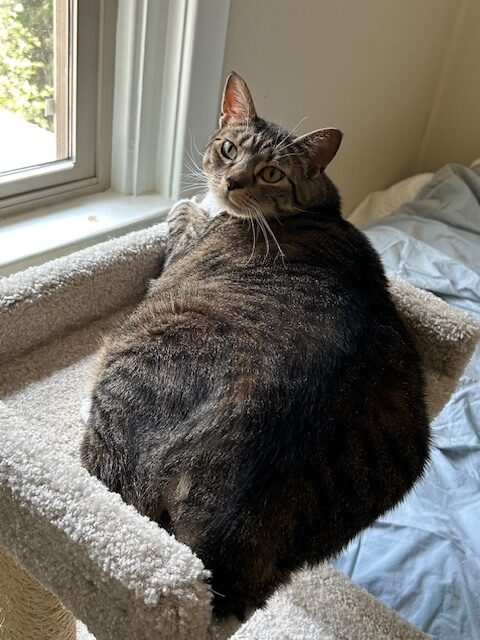
She’d been checked by the vet and it wasn’t a medical issue. Bella could no longer clean herself, especially her back end, so the whole area was a red, painful rash.
Who wants to use a box filled with clay litter that sticks to that open rash? She didn’t. So she found
other places to do her business.
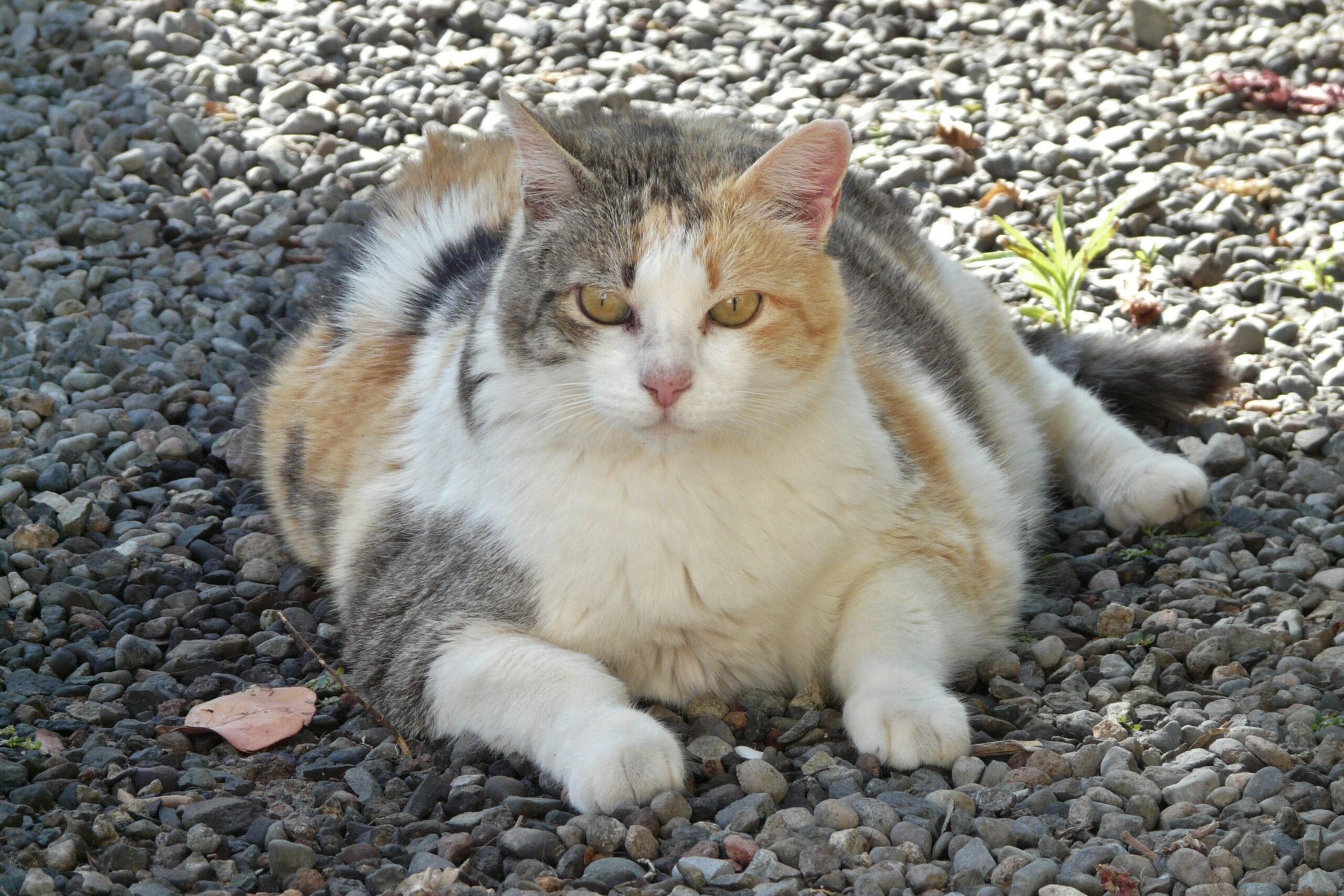
There are endless memes about cute, fat cats, and Garfield cartoons aside, there’s nothing
funny about an overweight or obese cat. They have problems like Bella did with cleaning
themselves, and they are prone to serious medical conditions like diabetes.
The extra weight causes mobility problems, and aggravates any arthritis the cat has, increasing pain levels. Being overweight puts extra strain on the cardiovascular system, makes cats more prone to urinary tract infections, and they have a shorter life span.
There is hope, however, for slimming down that chubby kitty: its all about calories and exercise.
Counting Calories
If at all possible, switch your cat to an all-canned food diet. These have many fewer carbs –
when did carbs help anyone lose weight? They are higher in protein and liquid, which your cat
needs.
Any canned food is better than dry for the overweight cat, but there are good (often
prescription) canned foods, with words like “metabolic” in the label that are high in fiber. That
helps your cat feel more satiated as you cut the calories.
If you can manage it, dividing the daily serving into 3 or 4 meals a day, also helps your cat feel satiated, and avoid having a “hangry” cat while dieting.
Control the daily calories. (Kcal, which is listed on cat food, is the same thing as Cal on people
food.) Overweight cats tend to be pretty sedentary, and that slows their metabolism.
Calorie control is critical, and sedentary cats need some tough love around their daily calorie count.
This is especially true if you have a cat that simply won’t eat canned food, and you need to feed
dry. There are lots of websites online that will tell you how many calories your cat needs.
Don’t believe them without checking with your vet. The more overweight your cat is the more
inaccurate those calorie charts are likely to be.
That said, don’t go below what your vet recommends for calories. Cats should lose weight
slowly, with a goal of a pound or slightly less per month. (Think long-term project!)
If your cat loses weight too quickly, as a result of not getting enough food, you’re in for some other serious health problems.

Get Moving!
Just like for people, cats can’t lose weight by dieting alone; they need to get moving. The more
overweight you cat is, the more sedentary she’s likely to be.
Start exploring fun ways to get kitty moving, even if it is 5 minutes twice a day at first. Don’t expect a sedentary cat to become an Olympian overnight, but try to find ways to build activity into every day’s schedule.
All kitties are different, so find an activity that motivates your particular cat to get up and go.
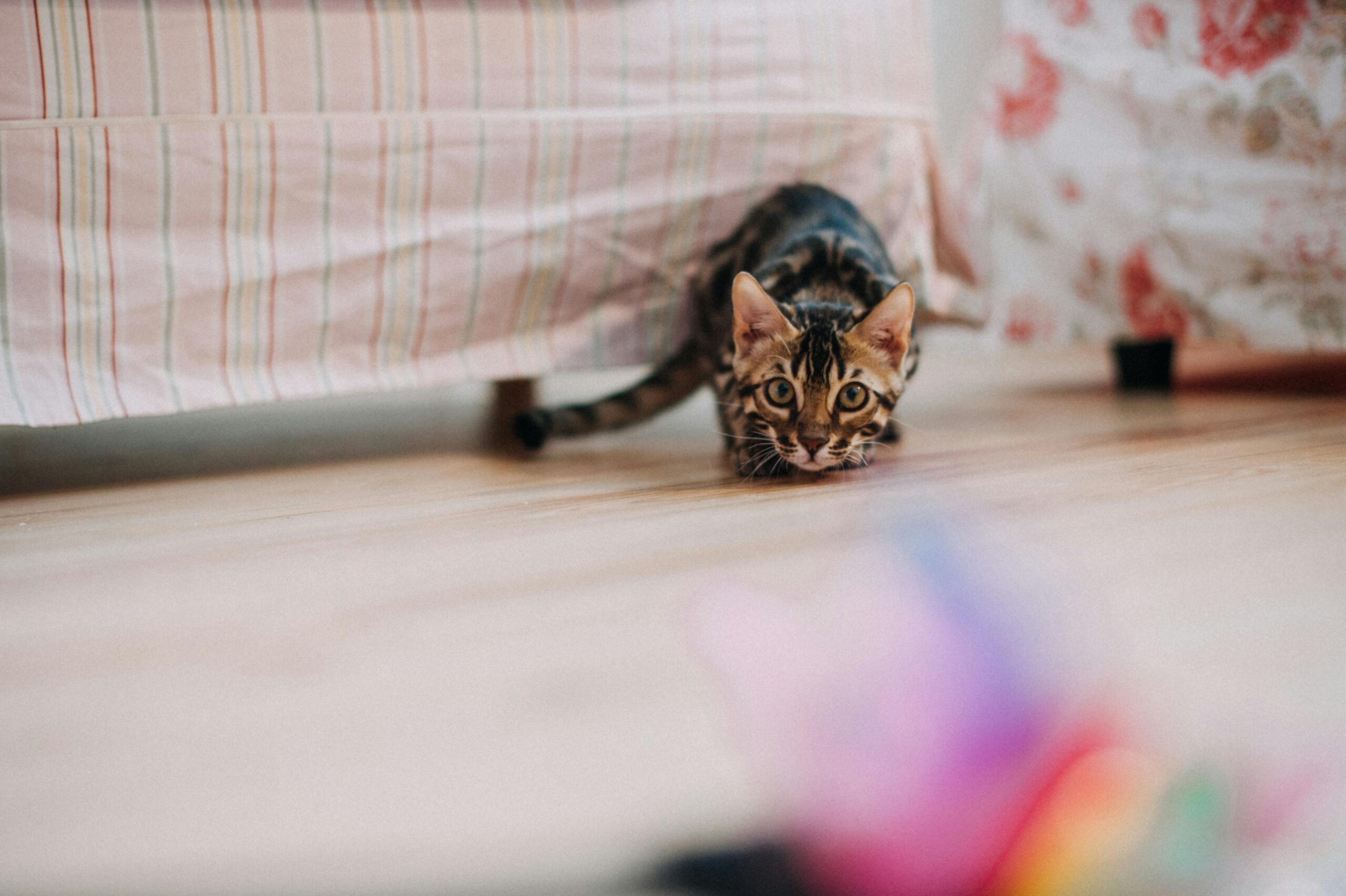
Toys work for some cats – the famous red dot (laser light), or wand toys that encourage your
cat to chase.
Electronic toys like mechanical mice and other critters moving around the room
could encourage Fluffy to go check it out. Feathers, like peacock feathers and others, often get
cats moving.
Hide their daily calories in food puzzles (perfect for cats who will only eat dry
food), or lick mats (for canned food), so kitty has to work to get the food.
Hide those food puzzles around the house if you don’t have other pets to encourage your cat to go find the food.
Be sure to have lots of options for climbing and scratching to encourage movement as well. If
your kitty is amenable, try using a kitty harness or vest, and leash to take him for walks.
Cats don’t walk like dogs – they sort of meander, but the stimulation of being outside can wake up a
cat’s desire to move around. Our rescue vet even has a cat that likes to walk on the treadmill,
but do this carefully, of course!
There are also wheels for cats to walk in and get exercise that way, though it will take a bit of training. (And yes, cats can absolutely be trained!)
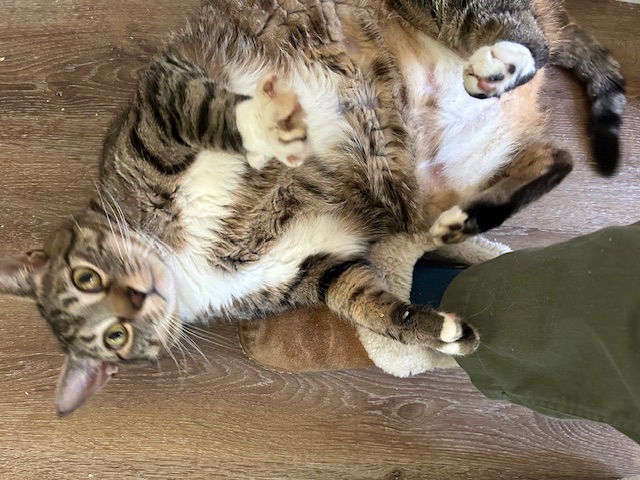
Bella lost 20% of her weight through clicker training and working through an obstacle course of things she had to step over and climb.
Check out lots of online videos about clicker training a cat if that appeals to you. It not only exercises the body but stimulates the mind as well.
Here’s one from Jackson Galaxy’s YouTube channel. Note: Jackson Galaxy is not affiliated with Loving Care Cat Rescue, and this video is just one example of the many out there on clicker training.
It’s Not Rocket Science
Helping your cat slim down doesn’t require complicated formulas or a degree in feline nutrition.
At its core, it’s simply about mindful portions and more opportunities to move and play.
It might mean a little tough love at the food bowl, but the payoff is huge: a healthier, happier cat
with a lower risk of diabetes — and more good years by your side.
Who doesn’t want a longer life with their cat?